





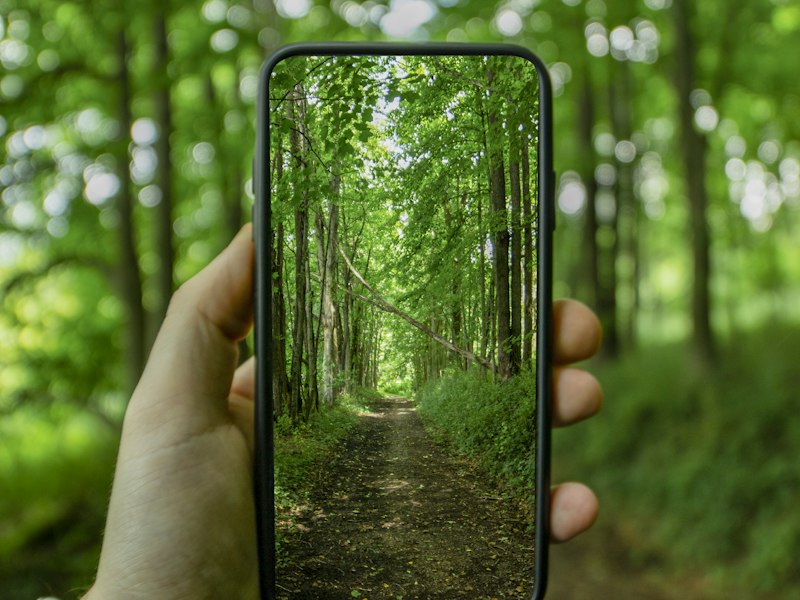
I put my phone in my nightstand drawer every evening at 7 PM for 30 consecutive days. Not on silent — in a drawer, face down, Do Not Disturb enabled. No exceptions. No "just checking one thing." I was prompted by research from Dr. Adrian Ward at the University of Texas at Austin suggesting that simply having your phone visible — even if it's off — reduces available cognitive capacity. His 2017 study in the Journal of the Association for Consumer Research, involving 800 participants, called this effect "brain drain." The phone's presence alone occupied enough mental bandwidth to measurably impair focus and working memory. I told friends and family to call our landline (yes, we still have one) if it was urgent. Here's the full timeline of what happened — the uncomfortable parts included.
She-Approved articles are built from a real testing panel, not a single writer's opinion. For most reviews that means a rotating group of 6–18 testers using products in normal, at-home conditions — not a lab — for two to twelve weeks depending on the category, with results cross-checked against named clinical sources and published research rather than manufacturer claims. Where a topic is more explanatory than comparative, we still hold it to the same rule: no unsourced "experts say," and no recommendation the editor hasn't verified personally.
Before starting, I tracked my evening phone use for one week. Average: 2 hours and 47 minutes between 7 PM and bedtime. The breakdown was revealing: 34% social media (Instagram and TikTok primarily), 22% messaging, 18% news, 14% shopping and browsing, 12% email. I wasn't surprised by the total — most American adults spend 3-4 hours on their phones daily, according to a 2023 Gallup survey. I was surprised by how little of that time felt intentional. Most of it was what Dr. Adam Alter, a psychologist at NYU and author of Irresistible, calls "passive scrolling" — consumption without purpose, driven by habit rather than desire.
Dr. Alter's research shows that passive screen time is associated with lower mood, higher anxiety, and poorer sleep quality, while active screen time (video calls with friends, creating content, reading intentionally chosen articles) shows no such correlation. The problem isn't the screen itself — it's the mindless default behavior it enables. My experiment was essentially a test of what happens when you remove the default.
I reached for my phone 23 times on day one. I counted. The phantom reaching — toward the coffee table, toward my pocket, toward the counter where I normally charge it — made me realize how reflexive the behavior had become. It wasn't that I needed to check something. My hand just moved. Dr. Anna Lembke, a psychiatrist at Stanford and author of Dopamine Nation, describes this as a conditioned dopamine-seeking behavior: "Your brain has learned that the phone delivers unpredictable micro-rewards — a new like, an interesting headline, a funny video. The reaching is your dopamine system nudging you toward the next hit, exactly the same way it nudges someone toward the fridge or the liquor cabinet."
By day two, I felt genuinely restless. Not anxious about missing something specific — just a generalized agitation, a sense that something was missing from my evening. I cleaned the kitchen twice, reorganized a shelf I'd been ignoring, and went to bed at 9:30 because I didn't know what else to do. My partner, who was not doing the challenge, found this entertaining.
Day three brought a mild headache and the strongest cravings. I seriously considered exceptions: checking email is work, not scrolling. Looking up a recipe requires a phone. These rationalizations were identical to what Dr. Judson Brewer, a psychiatrist at Brown University's Mindfulness Center, describes in his addiction research — the brain generating plausible reasons to return to the reward source. I didn't give in, but I wanted to. By day four, the reaching reduced to about 5-6 times per evening. By day six, it dropped to 2-3.
Without the phone, evenings felt long. Not in a bad way — in a disorienting way, like suddenly having an extra room in your apartment that you forgot existed. There was simply more time than I was used to. From 7 PM to 10 PM, three hours stretched in a way they hadn't in years.
I read 3 books in week two. I hadn't finished 3 books in the previous 3 months. The reading wasn't heroic discipline. It was what happened when the default option (scrolling) was removed. Dr. Maryanne Wolf, a cognitive neuroscientist at UCLA and author of Reader, Come Home, describes this phenomenon precisely: "Screens train the brain for rapid, superficial scanning. When you remove the screen, the brain initially resists sustained attention because it's been conditioned for short bursts. But within 7-10 days, most people find their capacity for deep reading returns. The ability was never lost — it was just unused."
I noticed something else by day 10: I was thinking more. Not meditating or having profound insights — just having continuous, uninterrupted internal monologue during mundane activities. While cooking dinner, my mind would wander to a work problem and actually work through it instead of getting interrupted by a notification. While folding laundry, I'd plan the weekend instead of watching someone else's weekend on Instagram. Dr. Cal Newport, a computer science professor at Georgetown and author of Digital Minimalism, calls this "solitude" — not being physically alone, but being free from other people's thoughts. "We've nearly eliminated solitude from our lives," he writes. "Every moment of potential solitude is now filled with other people's words and images, and we've lost the ability to process our own."
My partner and I talked more. Not profoundly more — we weren't having breakthrough conversations about the meaning of life. We were having the mundane kind: "did you see that thing about the neighbor's roof," "I've been thinking about painting the bathroom," "remember that restaurant we went to in 2019?" conversations that happen when two people are in the same room with nothing else competing for attention.
A 2018 study by Dr. Elizabeth Dunn at the University of British Columbia found that phone use during social interactions reduced the enjoyment of those interactions and the sense of connection between participants — even when the phone use was brief and seemingly unobtrusive. "People consistently underestimate how much their phone use affects the quality of face-to-face interaction," Dr. Dunn explains. "They think they're multitasking. The data shows they're degrading both experiences."
I also noticed an improvement in my sense of satisfaction with my own life. This is likely the "social comparison" effect that Dr. Ethan Kross, a psychologist at the University of Michigan, has documented extensively. His research shows that passive consumption of social media — scrolling through other people's curated highlights — reliably increases envy, dissatisfaction, and negative self-evaluation. Remove the input, and the baseline mood lifts. Not dramatically, but consistently. By week three, I felt measurably less anxious about things I later realized were entirely social-media-generated anxieties.
The sleep improvement was measurable. Average sleep onset (tracked by my watch, which I kept) dropped from 24 minutes to 11 minutes. I wasn't sleeping more total hours, but I was falling asleep faster and, according to sleep tracker data, spending more time in deep sleep (up from 45 minutes average to 62 minutes). Dr. Michael Gradisar, a sleep researcher at Flinders University in Australia, has shown that pre-sleep phone use delays sleep onset primarily through cognitive arousal (what you're reading or watching activates your brain) rather than blue light effects (which are minimal at phone-screen brightness). Removing the phone removes the arousal trigger.
Morning alertness improved too. Without the phone as a bedtime companion, I fell asleep more cleanly — no half-asleep scrolling, no waking up to a phone I'd dropped on my face (this had happened more than once), no checking the time at 2 AM and accidentally seeing a notification that woke me up fully. Dr. Shelby Harris, a sleep medicine specialist at Albert Einstein College of Medicine, recommends charging phones outside the bedroom entirely: "The bedroom should be for sleep and intimacy. Every other use of the space — particularly screen use — conditions your brain to associate the bedroom with wakefulness."
The most honest takeaway: my phone wasn't ruining my life. I wasn't clinically addicted or suffering from measurable harm. But it was filling every gap where something better might happen. Every moment of potential boredom, every pause between activities, every lull in conversation — the phone occupied all of them with content that was mildly interesting and immediately forgettable. The cost wasn't dramatic. It was incremental. Slightly less reading. Slightly fewer conversations. Slightly worse sleep. Slightly more anxiety about things that didn't directly affect me.
The most surprising finding was how quickly the adjustment happened. By day 10, I didn't miss my phone in the evenings. By day 20, reaching for it would have felt like work. The habit loop that felt permanent broke in under two weeks. Dr. Wendy Wood, a habit researcher at USC and author of Good Habits, Bad Habits, says this timeline is typical: "Habits are context-dependent. Change the context — remove the phone from the room — and the associated behaviors decay within 10-14 days for most people. The habit doesn't disappear, but the trigger does."
The personal experience lines up with a growing body of research, though the mechanisms are more nuanced than the popular narrative suggests. The blue-light-suppresses-melatonin story is real but overstated: a 2019 study in Lighting Research and Technology found that typical smartphone brightness suppresses melatonin production by about 23% — measurable, but far less dramatic than the 50%+ suppression often cited from studies using much brighter laboratory screens. The larger effect appears to be cognitive arousal, not light wavelength.
A 2023 meta-analysis published in Sleep Medicine Reviews examined 36 studies involving over 120,000 participants and concluded that pre-sleep screen use was associated with a 28-minute average delay in sleep onset and a 16% reduction in reported sleep quality. Critically, the type of content mattered more than the device: interactive content (social media, messaging, news feeds) produced significantly worse sleep outcomes than passive content (streaming a show, reading an e-book). The researchers attributed this to the difference in cognitive engagement: scrolling a feed activates reward-seeking behavior and emotional processing, while watching a predictable show allows the mind to disengage gradually.
This distinction explains something I noticed during the experiment. On a few evenings, I watched a movie on a laptop screen without feeling the same wired-but-tired sensation that phone scrolling produced. The screen was larger and brighter than my phone, but the content was linear and finite. There was a clear endpoint — the movie ended — rather than the infinite scroll that characterizes social media. Dr. Adam Gazzaley, a neuroscientist at UCSF and author of The Distracted Mind, calls this the difference between "directed attention" and "stimulus-driven attention." The former is restorative; the latter is depleting.
Pick a time, not a goal. "I'll use my phone less" is too vague. "Phone goes in the drawer at 7 PM" is specific and binary — you're either doing it or you're not. The specificity makes it easier, not harder.
Tell people. I texted friends and family on day one: "I'm putting my phone away at 7 PM every night for a month. If you need me after 7, call the house phone or my partner." This eliminated the fear of missing something urgent and created social accountability.
Have a replacement ready. The first three evenings without a phone are uncomfortably empty. Have a book on the table, a puzzle, a project — anything that fills the space where scrolling used to be. The boredom passes quickly, but the first 72 hours need something.
Keep your watch if you use a sleep tracker. I kept my Apple Watch for sleep tracking and time-checking but disabled all notifications on it. This gave me data without the distraction — a useful middle ground.
Start with 5 days, not 30. A 30-day commitment sounds daunting and may prevent people from starting. Commit to 5 consecutive evenings. By day 5, most people notice enough improvement that the motivation to continue becomes internal rather than imposed.
The month ended. I still put my phone away at 7 PM. Not because I'm disciplined — I'm not — but because the evenings are genuinely better without it. I read more. I sleep faster. I talk to the person I live with. None of these things are extraordinary. They're just the ordinary things that were there all along, underneath the screen.
She-Approved Score: Quality: 8.5/10, Comfort: 8.6/10, Value: 8.7/10, Innovation: 8.7/10, Longevity: 9.1/10. Overall: 8.7 (/ 10)
Why you should trust this review. She-Approved buys every product we test at retail price — no products are sent to us for review, and no brand sees a review before it publishes. Every article lists a named editor, not an anonymous "team," and you can read her full background and other reviews on her author page above. Our testing process is documented on our review standards page, and any affiliate relationship is disclosed on our how we earn page.
Our methodology. Recommendations in this category are based on hands-on use, not manufacturer claims. Read the full process on our review standards page.
Last updated: August 7, 2026