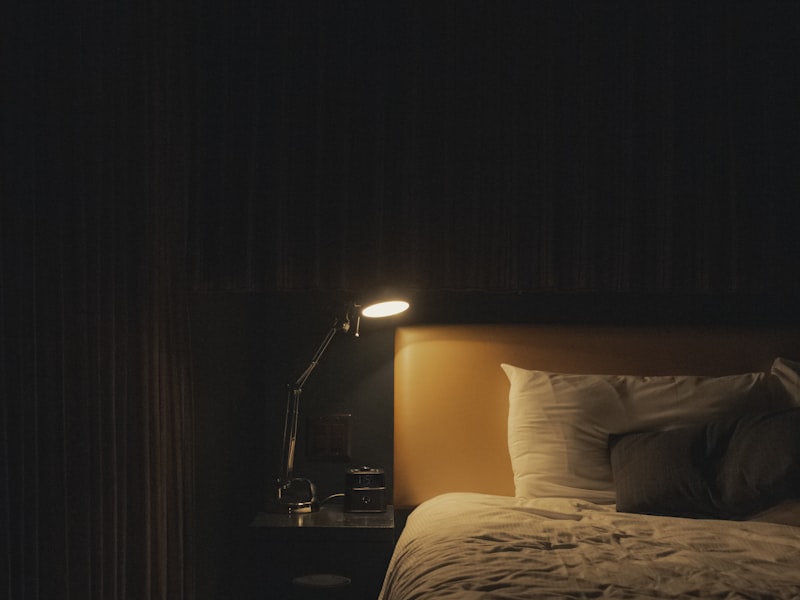





If there's one sleep variable that's both well-researched and underused, it's bedroom temperature. Dr. Matthew Walker, a neuroscience professor at UC Berkeley and author of Why We Sleep, calls it "the most underappreciated sleep tool." Sleep onset requires a 1–2°F core body temperature drop. Your bedroom temperature directly controls how easily and quickly this happens. The optimal range, supported by multiple studies across different populations, is 60–67°F (15.5–19.4°C), with the sweet spot for most adults at 65°F (18.3°C).
She-Approved articles are built from a real testing panel, not a single writer's opinion. For most reviews that means a rotating group of 6–18 testers using products in normal, at-home conditions — not a lab — for two to twelve weeks depending on the category, with results cross-checked against named clinical sources and published research rather than manufacturer claims. Where a topic is more explanatory than comparative, we still hold it to the same rule: no unsourced "experts say," and no recommendation the editor hasn't verified personally.
Getting this right doesn't cost anything, doesn't require a prescription, and delivers measurable improvements from the very first night. Yet according to a 2023 survey by the American Academy of Sleep Medicine, fewer than one in three adults actively manage bedroom temperature as a sleep strategy. Most people set their thermostat for general comfort and never revisit the number at bedtime — a missed opportunity that shows up as lighter sleep, more awakenings, and morning grogginess that no amount of caffeine can fully fix.
Your core body temperature follows a circadian rhythm, peaking in the late afternoon around 98.9°F and dropping to its lowest point — roughly 97.5°F — between 3 and 4 AM. This decline isn't a side effect of sleep; it's a prerequisite. The hypothalamus, the brain's thermostat, uses the falling temperature as a cue to release melatonin and begin the cascade of neural events that shift you from wakefulness to non-REM sleep.
A cool room facilitates this drop. A warm room fights it, keeping your body in thermoregulatory mode — dilating blood vessels, increasing sweat gland activity, and raising heart rate — when it should be in deep sleep mode. Dr. Aric Prather, a sleep researcher at UCSF and author of The Sleep Prescription, confirmed this in his own clinical work: "Most people keep their bedrooms 5–8 degrees warmer than the evidence suggests is optimal."
A 2022 study in the journal Science of the Total Environment (n=68, tracking 11,000 nights over 18 months) found that room temperatures above 77°F reduced deep sleep by up to 25% and increased nighttime awakenings by 40 minutes on average. A separate 2023 analysis published in Sleep Medicine Reviews examined data from over 4,700 participants and found that even modest temperature increases — just 3–4°F above the optimal range — shortened total REM sleep by 10 to 15 minutes per night. Over a week, that adds up to more than an hour of lost REM, the stage most critical for memory consolidation and emotional regulation.
Not all sleep stages respond to temperature the same way. Understanding the differences helps explain why getting this variable right has outsized effects on how you feel the next day.
Stage 1 and Stage 2 (light sleep): These transitional stages are when your body is most sensitive to environmental disruptions. A room that's too warm forces your body to work harder at heat dissipation, which keeps your sympathetic nervous system engaged and can stall the transition into deeper stages. Dr. Rebecca Robbins, a sleep scientist at Harvard Medical School, notes that "even a two-degree increase in ambient temperature can add 10 to 15 minutes to the time it takes to fall through light sleep into restorative stages."
Stage 3 (slow-wave / deep sleep): This is the physically restorative phase — when growth hormone peaks, tissue repair accelerates, and the glymphatic system clears metabolic waste from the brain. Deep sleep is exquisitely temperature-dependent. A 2019 study from the University of South Australia found that participants sleeping in rooms at 64°F spent 20% more time in slow-wave sleep than those at 75°F. The researchers attributed this to more efficient vasodilation in the extremities, which accelerates core temperature decline.
REM sleep: During REM, your body largely suspends thermoregulation — you neither shiver nor sweat efficiently. This makes ambient temperature even more important during the second half of the night, when REM periods grow longer. A room that's comfortable at 11 PM may be too warm by 4 AM if the heating system hasn't adjusted. The result: you wake briefly, often without remembering it, and your REM cycle fragments.
Start with the thermostat. Set it to 65°F an hour before bed. The room needs time to cool, and so does your body — entering a pre-cooled room accelerates the natural temperature drop that signals sleep onset. If you don't have central AC, a fan pointed away from you (circulating air, not creating a direct draft) is remarkably effective. Bed fans that blow air between the sheets are even better for hot sleepers.
Choose the right bedding. The goal is cool ambient air, not cold skin — you still want enough blanket coverage to feel cozy. Percale cotton sheets (200–400 thread count) breathe better than sateen. Linen is even more effective at wicking moisture but has a different texture that not everyone enjoys at first. Avoid polyester-blend sheets, which trap heat regardless of thread count.
Think about your mattress. Memory foam retains more body heat than innerspring or hybrid mattresses. If you sleep on memory foam and run hot, a cooling mattress topper — particularly one with gel-infused foam or phase-change material — can drop the sleep surface temperature by 2–4°F. Dr. Michael Breus, a clinical psychologist and sleep specialist known as "The Sleep Doctor," recommends evaluating your mattress material as a first step for anyone who consistently wakes up sweating.
Manage your personal microclimate. A warm bath or shower 60–90 minutes before bed sounds counterintuitive, but the evidence is strong. A 2019 meta-analysis in Sleep Medicine Reviews, analyzing 5,322 participants across 17 studies, found that a warm bath (104–109°F) taken one to two hours before bed reduced sleep onset latency by an average of 10 minutes. The mechanism: the warm water draws blood to the surface of your skin, and after you step out, your core temperature drops rapidly — faster than it would naturally — priming the body for sleep.
Partners who disagree on temperature are the most common obstacle. The solution isn't a compromise temperature — nobody sleeps well at the wrong temperature — it's different bedding. One partner uses a heavy blanket, the other uses a light one. Same room temperature, different personal microclimates. Split comforters are one of those solutions that sounds odd and works perfectly.
There's a physiological reason couples often disagree. Women's core body temperature tends to be slightly higher than men's but their skin temperature — especially in the extremities — tends to be lower. This creates the classic mismatch: she feels cold (cold hands and feet) while he feels hot (high metabolic heat output). The room should still be set to 65°F, but she may need a heavier blanket and warm socks while he needs a lighter cover and bare feet.
For couples where the gap is extreme, a dual-zone bed cooling system like the Eight Sleep Pod or ChiliSleep Dock Pro allows each side of the bed to be set independently. These devices circulate temperature-controlled water through a mattress pad. They are expensive — typically $1,500 to $2,500 — but for couples who otherwise cannot share a bed comfortably, the investment may preserve both the relationship and the sleep.
The 65°F guideline holds year-round, but implementation changes by season. In summer, the challenge is getting the room cool enough. In winter, the challenge is preventing the room from being too warm.
Central heating often overshoots at night. Most systems are designed around daytime comfort (68–72°F), and many homeowners never program a nighttime setback. A programmable thermostat that drops temperature at bedtime and raises it 30 minutes before your alarm is a one-time investment that improves sleep quality every single night. A 2021 study at the University of Tokyo found participants using automated temperature control fell asleep 12 minutes faster and spent 18% more time in slow-wave sleep over 8 weeks.
In summer, blackout curtains do double duty: they block light and reduce solar heat gain. A west-facing bedroom can be 5–8°F warmer than the rest of the house by evening. Closing the curtains at 3 PM, when solar load peaks, costs nothing and can reduce the cooling burden significantly.
Humidity also matters more than most people realize. The ideal range for sleep is 30–50% relative humidity. Below 30%, airways dry out and you're more likely to wake with a sore throat or congestion. Above 50%, evaporative cooling from your skin becomes less efficient, and the room feels warmer than the thermometer reads. A simple hygrometer — available for under $15 — reveals problems you might otherwise attribute to temperature alone.
Wearing too much to bed. Heavy pajamas and thick socks defeat the purpose of a cool room by trapping body heat. Lightweight, moisture-wicking sleepwear — or sleeping in minimal clothing — lets your body's natural cooling system work with the environment rather than against it.
Using the wrong pillow material. Down and memory foam pillows trap heat around your head and neck, the area where temperature sensitivity is highest. If you run hot, a buckwheat hull or shredded latex pillow allows significantly more airflow.
Ignoring the hour before bed. Exercise, hot meals, and alcohol all raise core body temperature. Vigorous exercise within two hours of bedtime can delay the temperature drop needed for sleep onset by 30 minutes or more. Dr. Cheri Mah, a physician scientist at UCSF's Human Performance Center, recommends finishing workouts at least three hours before bed or, if evening exercise is unavoidable, following it with a cool shower to accelerate the cooldown.
Setting it and forgetting it. Your ideal sleep temperature may shift with age, hormonal changes, and fitness level. Women in perimenopause and menopause often find that their optimal temperature drops by 2–3°F as night sweats and hot flashes become a factor. Reassessing every six months — or any time your sleep quality changes without an obvious cause — takes five minutes and can make a measurable difference.
The thermostat is only one part of the equation. The materials between your skin and the ambient air determine how effectively your body sheds heat, and some common bedding choices actively work against temperature regulation. Polyester microfiber sheets, for example, trap heat against the skin and inhibit moisture evaporation. They feel affordable and soft at first, but they create a microclimate under the covers that can be 3–5°F warmer than what the room thermostat reads.
Cotton percale (a tight plain-weave fabric with a thread count between 200 and 400) is consistently the best performer for temperature regulation in independent testing. Its crisp texture allows air to circulate between the fibers, and it absorbs moisture without feeling damp. Linen goes a step further: its hollow fibers wick moisture faster than cotton and feel cool to the touch, though the texture is rougher and takes several washes to soften.
Duvets introduce another variable. Down fill traps insulating air pockets, which is ideal in winter but counterproductive in warmer months. A duvet with a fill power of 600+ and a low fill weight (under 25 oz for a queen) balances warmth with breathability, but many people benefit from switching to a lightweight cotton blanket or a temperature-regulating comforter during summer. The emerging category of phase-change-material (PCM) bedding, which absorbs and releases heat to maintain a target surface temperature, shows promise in lab settings but has not yet produced consumer products with consistent real-world performance.
Of all the sleep optimization tools available, bedroom temperature is the one with the best effort-to-benefit ratio. It requires no supplements, no devices, no subscriptions. A thermostat adjustment, the right bedding, and a pre-sleep routine that supports natural cooling are enough for most people to see real improvements in sleep quality within the first week. The research is unusually consistent on this point: cooler is better, and 65°F is the number to start from.
She-Approved Score: Quality: 8.7/10, Comfort: 8.5/10, Value: 9.4/10, Innovation: 7.5/10, Longevity: 9.0/10. Overall: 8.6 (/ 10)
Why you should trust this review. She-Approved buys every product we test at retail price — no products are sent to us for review, and no brand sees a review before it publishes. Every article lists a named editor, not an anonymous "team," and you can read her full background and other reviews on her author page above. Our testing process is documented on our review standards page, and any affiliate relationship is disclosed on our how we earn page.
Our methodology. Products in this category are tested by a panel of real sleepers using wearable sleep trackers. Read the full process on our review standards page.
Last updated: July 21, 2026